Contents
The Return Moment Defines the Relationship
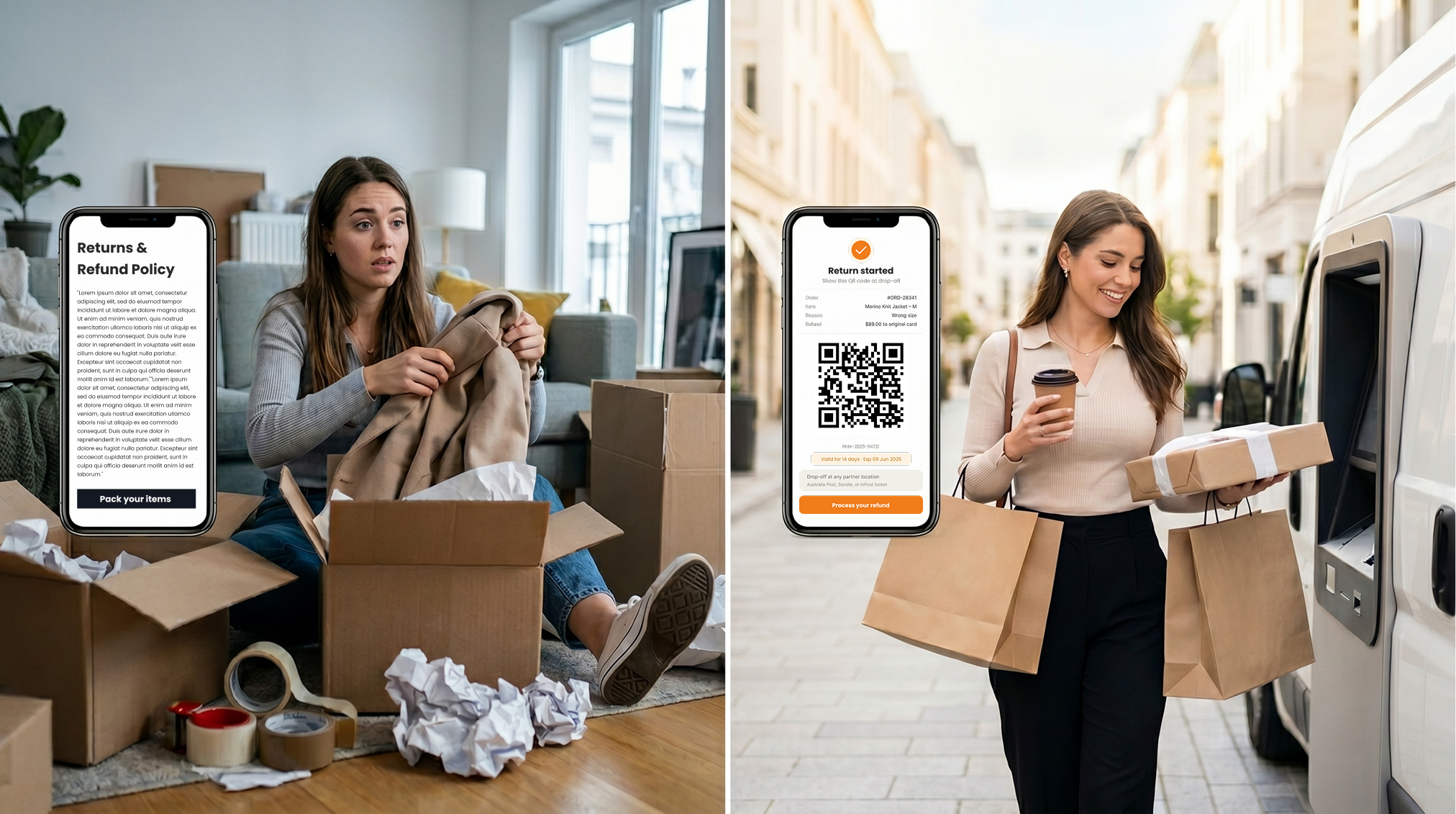 What does a great return experience do for customer loyalty? The numbers make the case clearly. Forty-six percent of shoppers have abandoned a purchase because the returns process looked difficult. Ninety-five percent say they would shop again after a satisfactory return experience.
That last number is the one that matters strategically. A great return experience does not just recover a customer, it creates one. The purchase was made in optimism. The return is made in disappointment. How a retailer handles that moment determines whether the relationship continues.
The tension every operations leader knows: honouring that promise generously costs money. And as return volumes grow, that cost compounds.
Why Standardisation Is the Wrong Answer
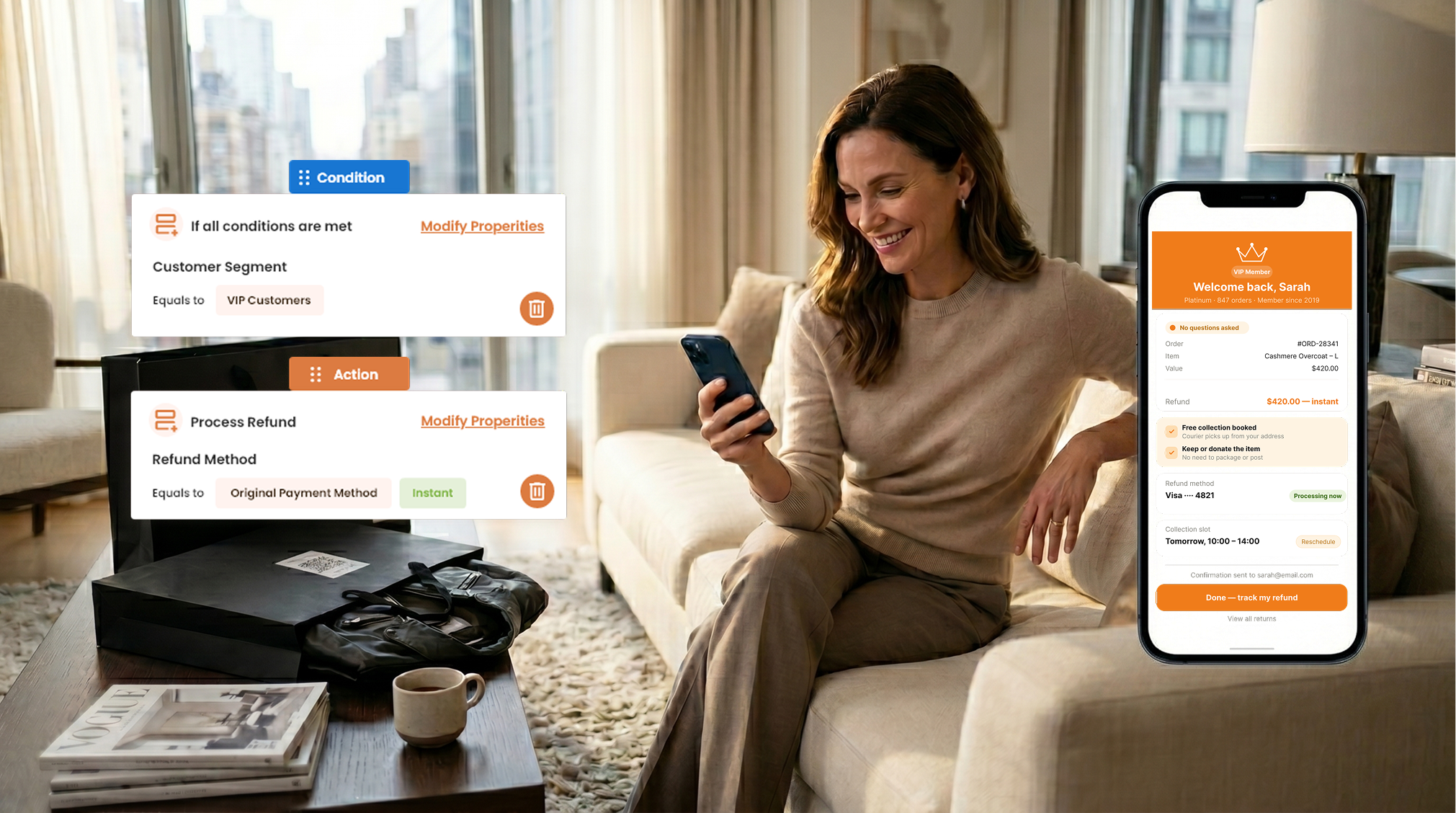
The traditional approach to retail returns management is to standardise. One policy. One carrier. One destination. Apply uniformly and manage costs through volume.
The problem is that standardisation treats a $20 order from a first-time customer the same as a $2,000 order from a top-tier loyalty member. It is efficient at average. It is expensive at scale and damaging at the premium end.
How can retailers automate their returns process with AI?
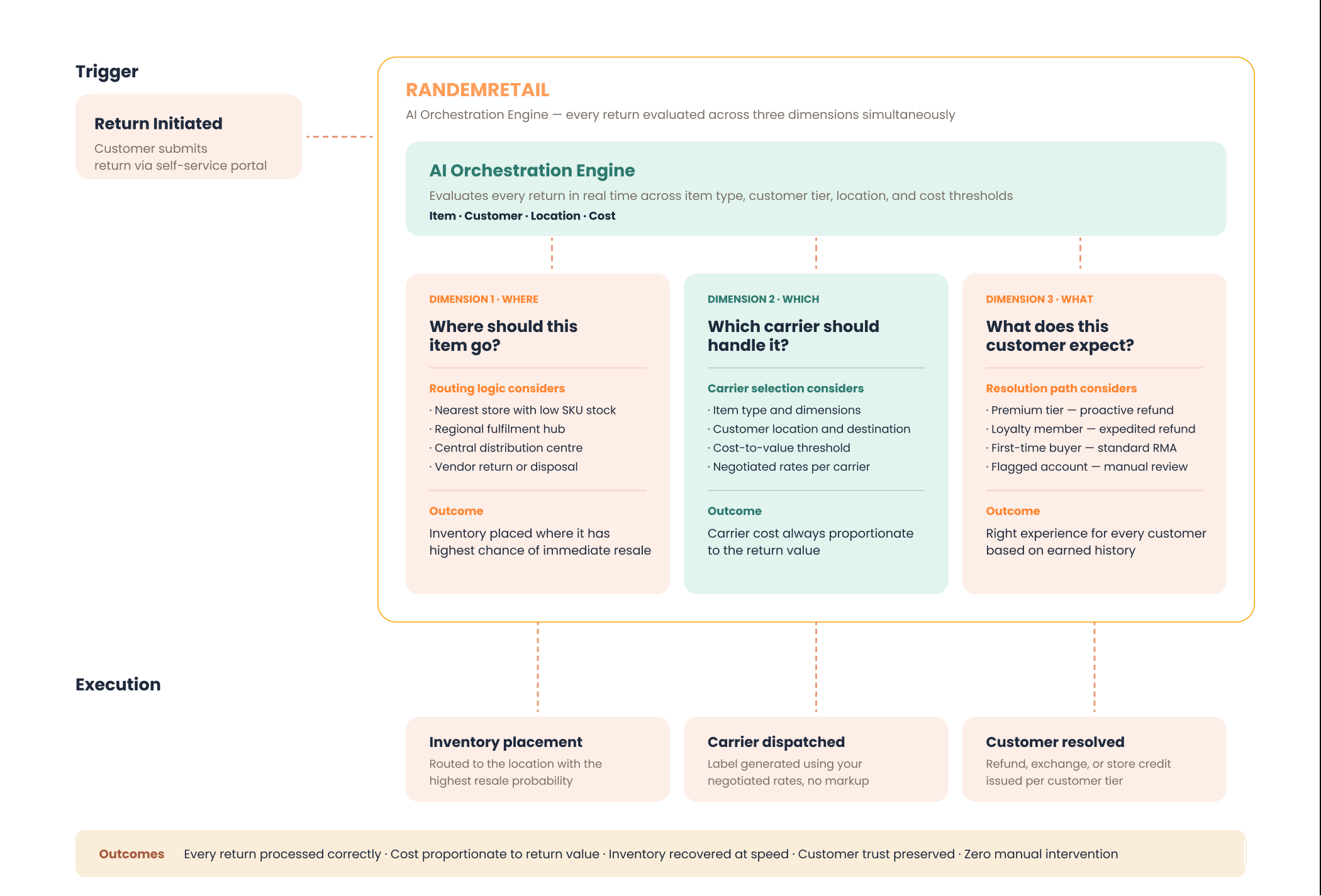
The right question is not “how do we process returns faster?” It is “how do we process every return correctly, for this item, this customer, this location, at this cost?”
RANDEMRETAIL’s AI Orchestration Engine evaluates every return across three dimensions simultaneously.
Where should this item go?
Not every return belongs in a central warehouse. A sellable item close to a store with low stock of that SKU should go there, not across the country to a distribution centre.
Which carrier should handle it?
The AI selects the right carrier based on item type, customer location, destination, and cost thresholds. The carrier cost is always proportionate to the return value.
What does this customer expect?
A premium tier customer has earned a different experience. A proactive refund issued before the item is physically received is appropriate for customers whose history justifies that trust. A first-time customer warrants a standard RMA flow. The AI knows the difference and applies the right process automatically.
This is how retailers automate their returns process with AI without losing control of policy or cost. The policy defines the rules. The AI executes them intelligently, at scale, for every return, without manual intervention.
Returns Are an Inventory Event, Not Just a Cost

Are retail returns a cost or an inventory opportunity cost? Every return routed incorrectly loses value. A garment sent to a warehouse when it should go back to a store floor for immediate resale is a missed margin opportunity.
RANDEMRETAIL’s AI treats every return as an inventory placement decision, routing each item to where it has the highest chance of immediate resale.
Returns are not just a process to minimise. They are an inventory event to optimise.
The Checkout Moment Most Retailers Miss
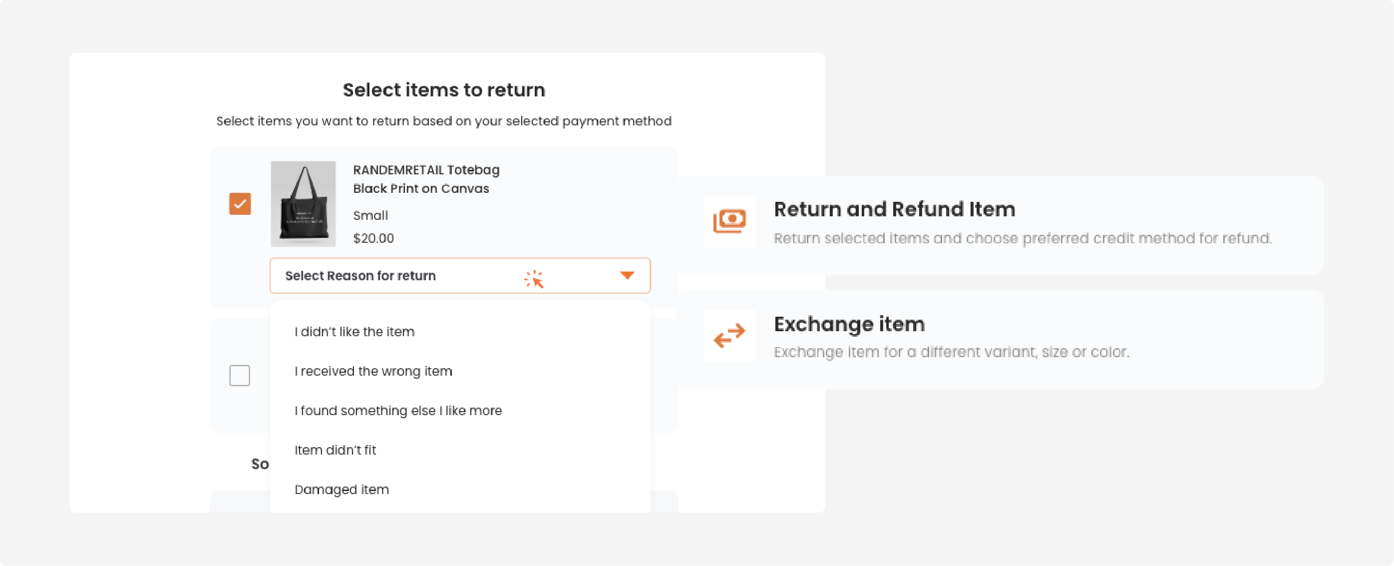
Eighty-one percent of consumers read a return policy before making a purchase. The returns experience begins before the order is placed.
A clear, visible returns policy at checkout removes the final hesitation between browsing and buying, making retail returns management a revenue function, not just an operational one.
