Back orders and preorders across stores and warehouses: How to keep selling stock that is on its way
Contents
When a popular product sells out, most retailers hide it or mark it as unavailable, and the customer goes elsewhere. If the next delivery is already booked, that sale did not need to be lost. This guide explains how back orders and pre-orders should work for a retailer with several stores and warehouses, and what your order management needs to get right before you switch them on.
The short answer
A back order lets a customer buy a product that is out of stock but due to arrive, and a preorder lets a customer buy a product before it has launched. For multi location retailers, both depend on knowing how much stock is due, where it will land and in what order waiting customers should receive it. A reliable setup takes the order, holds the customer's place in the queue, allocates units the moment they arrive at any location, and keeps the customer informed until the order is delivered.
Back orders and preorders are not the same thing
The two are often used interchangeably, but they solve different problems and customers expect different things from each.
| Back order | Pre-order | |
|---|---|---|
| What it is | Buying a product that is temporarily out of stock | Buying a product before it has launched |
| When to use it | A best-seller has sold out and a delivery is already booked | A new product, collection or limited release is on its way |
| What the customer expects | A clear date and a short wait | A guaranteed place in the queue on launch day |
| What can go wrong | Selling more units than are actually arriving | Launch dates moving without the customer being told |
Some retailers take payment when the order is placed, while others authorise the card and take payment when the order is dispatched. Check what your payment provider supports and what is expected in each country you sell to before you choose.
Why this gets complicated once you have several locations
With one warehouse, a back order is fairly simple: stock arrives, and waiting orders are filled in the order they were placed. Once you have stores, dark stores and more than one warehouse, a series of questions appears that a single warehouse setup never has to answer.
Incoming stock may land at the warehouse while the customer chose to collect from a store in another city. Part of an order may be in stock today while the rest is due next week. A wholesale customer and a hundred online customers may all be waiting for the same delivery. When a customer cancels, their unit needs to go straight to the next person in the queue rather than back onto a shelf where nobody is looking for it. This is where it gets complicated, which is why RANDEMRETAIL exists.
What a reliable back order and pre-order workflow looks like
-
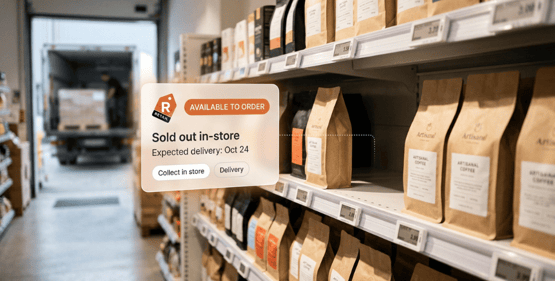
The product page tells the truth. Customers can see that an item is available to order, when it is expected and how they will receive it, before they reach the basket.
-
The order is placed in a queue. Waiting orders are lined up by the time they were placed, unless you have set priority rules, for example for loyalty members or trade accounts.
-
You never sell more than is arriving. The number of units available to back order is capped at the quantity due on the incoming delivery, less anything you choose to hold back.
-
Units are allocated the moment they arrive. When stock lands at any warehouse or store, it is assigned to the next orders in the queue automatically, rather than being put away first and found later.
-
Each order is fulfilled from the right place. Orders are routed from wherever the stock landed, or transferred to the store the customer chose for collection.
-
Customers are kept informed. If a delivery date moves, every affected customer hears about it from you before they have to ask.
-
Exceptions are handled without a spreadsheet. Partial deliveries, delayed shipments and cancellations update the queue automatically, and freed-up units go straight to the next customer.
The mistakes we see most often
The most common mistake is selling against stock that is not actually coming. A purchase order is reduced or delayed, nobody updates the website, and customers are left waiting for units that will never arrive. The second is running the queue in a spreadsheet, which works for twenty orders and fails at two hundred. The third is splitting orders badly, so that a customer receives four parcels over three weeks when they would happily have waited a few days for one.
How wholesale fits in
Wholesale and trade customers often order ahead for stock that has not arrived yet. If those orders are agreed by email and keyed in somewhere else, they compete for the same incoming units without anyone being able to see it. RANDEMRETAIL's Draft Order module brings wholesale, phone and in-store orders into the same flow, so trade and retail customers draw from the same incoming stock under rules you set, such as reserving a share of each delivery for each channel.
Where RANDEMRETAIL fits
Most retailers we speak to have been told that reliable back orders need either a manual process or a large OMS programme. We built RANDEMRETAIL so that neither is necessary.
RANDEMRETAIL is an e-commerce orchestration platform built natively on Shopify and BigCommerce, as well as other e-commerce platforms. Its Back Order module lets you keep taking orders against incoming stock and allocates the units to waiting customers as soon as they land, instead of hiding the product and losing the sale. Because the module runs on the same live inventory record as your stores, dark stores and warehouses, every incoming unit is visible across the whole business, and every order is routed from the location that should fulfil it. The Draft Order module brings wholesale, phone and in-store orders into the same queue, and RANDEM-ED, the AI inside the platform, handles the exceptions: delayed deliveries, partial shipments and cancellations.
It sits alongside Shopify checkout and POS and your existing ERP rather than replacing them, and most clients are live in weeks, not quarters.
Frequently asked questions
What is the difference between a back order and a pre-order?
A back order lets a customer buy a product that is temporarily out of stock but due to arrive. A pre-order lets a customer buy a product before it has launched. Both need accurate dates, a fair queue and automatic allocation when the stock arrives.
Which order management system handles back orders and pre-orders reliably?
Look for a platform that caps sales at the quantity actually arriving, queues orders fairly, allocates stock automatically when it lands at any location and keeps customers informed. RANDEMRETAIL's Back Order module does this on top of one live inventory record across every store and warehouse.
Can I take back orders on Shopify Plus with several stores?
Yes, with an orchestration layer. RANDEMRETAIL runs natively on Shopify Plus, lets you keep selling products that are on their way, and allocates incoming units to waiting customers from whichever store or warehouse the stock arrives at.
How do I stop overselling incoming stock?
Cap the number of units available to back order at the quantity on the incoming delivery, update that figure whenever a supplier changes the delivery, and hold back a buffer if deliveries are often short. Doing this by hand is where most overselling starts.
Should I take payment when a back order is placed?
It depends on your payment provider, your margins and the rules in the countries you sell to. Some retailers take payment immediately, while others authorise the card and take payment at dispatch. Check both options with your payment provider before you decide.
How should wholesale orders share incoming stock with online customers?
Bring them into the same system and set clear rules, such as reserving a share of each delivery for trade accounts. RANDEMRETAIL's Draft Order module puts wholesale, phone and in-store orders in the same queue as online orders, so nothing is promised twice.
.
Stop losing sales to stock that is already on its way
Tell us which products sell out most often and how your deliveries arrive. On a 20 minute call we will show you how RANDEMRETAIL would turn those gaps into back orders.