Why Most OMS Platforms Could be Holding Back your Growth
Contents
Ask most retailers what they think when an OMS comes up, and the answer is usually the same “this is going to take a lot of time and effort to get right, and once it's live, it'll be very hard to correct whatever we got wrong”
We can tell you from experience that no retailer, small or large, gets it perfect at launch. There are always changes, tweaks and enhancements that show up once real orders start flowing. That's not a failure of planning. It's just what happens when a system goes operational live.
So the question that actually matters isn't "will we get it right first time." It's this: how much effort does it take to make a change once you're live, and how much effort does it take to switch on a feature your business suddenly needs?
Most OMS platforms make growth harder than it needs to be, and it almost always comes down to the same thing being overly complicated and cumbersome. You buy one complex system and pay for dozens of features you'll never switch on, because the platform wasn't built to be taken apart.
Most platforms are not east to change, adding or swapping a capability means a painful tear out and replace project, not a simple twea, because the architecture wasn't designed to flex.
The launch times are elongated, legacy platforms drag through six-to-twelve-month implementations before you see any value at all, let alone the value of the next change. These are because of design choices, rather than categorical distinctions A platform built monolithic stays monolithic. A platform built rigid stays rigid. The slowness isn't inherent to order management, it's inherent to how most of these systems were architected in the first place.
What makes RANDMRETAIL any different?
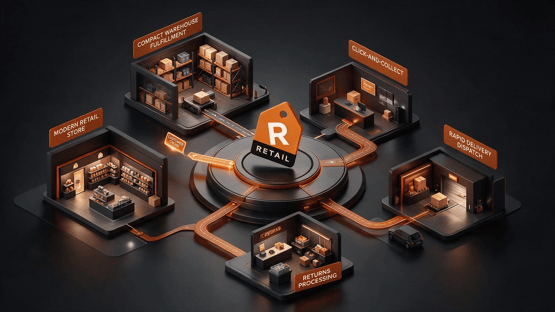
RANDEMRETAIL isn't just an OMS. It's an e-commerce orchestration platform. That distinction matters more than it sounds like it should, because it changes what the system is actually responsible for.
We don't just streamline your online orders. We control the complete customer order journey, from the moment an order is placed through to delivery and returns, and everything that happens in between.
Order placed
Captured and routed the moment it happens, across whichever channel it came from.
Pick, pack and prepare
If the customer chooses to collect in store, our RMS (Retail Management System) gets it picked, packed and ready to collect, in store.
Customer communication
Every update the customer receives about their order runs through the same orchestration, not a bolted-on notifications tool.
Urgency, handled
If the journey needs to be fast, under two hours fast, our Q-commerce solution takes it from there.
Delivery and returns
The same orchestration that got the order out the door manages what happens if it comes back.
None of that is a collection of separate tools stitched together. It's one orchestration layer, and that's exactly why turning a new function of it on doesn't require a project.
Days To Configure not Months
80% functionality Out of the box, then customised through no-code and low-code
We designed it this way on purpose. RANDEMRETAIL gives you the core of what your business needs today, out of the box, proven, ready to switch on. The remaining 20% is yours to shape through no-code and low-code configuration, without a project plan standing between you and the change you need.
The question worth asking
Is your current system letting you test new features without taxing your time and your team? Or is every change a negotiation with a project timeline that was never yours to begin with? You deserve better than that. You deserve an orchestration platform that lets you run continuous tests and changes without the headache, without the project plans, and without waiting on someone else's delivery schedule to run your own business.